Huawei Ascend 950DT: Can China's New AI Chip Truly Replace NVIDIA?
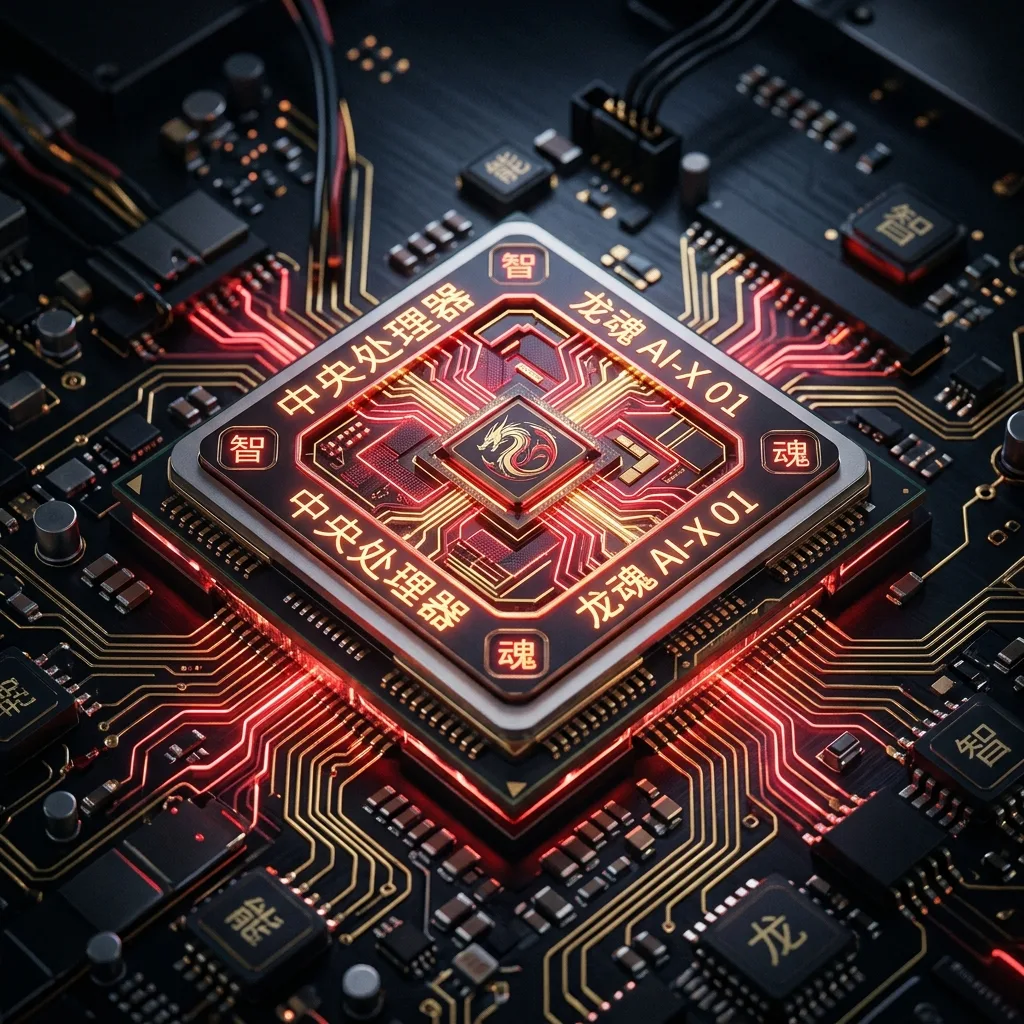
- Huawei has scheduled the debut of the Ascend 950DT AI accelerator for August 2026, aiming to circumvent Western export bans.
- The chip focuses on massive upgrades in vector computing bandwidth and native low-precision FP8 format performance.
- Huawei is expected to output 600,000 units of the older Ascend 910C in 2026, which has successfully trained deep models like DeepSeek.
- Production bottlenecks remain, particularly domestic lithography nodes (around 7nm) and access to High-Bandwidth Memory (HBM).
China's Sovereign Computing Strategy
The geopolitical struggle for artificial intelligence dominance is increasingly fought in the silicon foundries. With the United States expanding bans on high-end NVIDIA and AMD GPUs, Chinese tech giants have faced a stark reality: develop domestic hardware or fall behind in the AI race. Huawei, the vanguard of China's domestic hardware program, is responding aggressively. In 2026, the company is spearheading a massive **$295 billion national AI data center grid** powered almost entirely by domestic silicon.
This massive infrastructure campaign, aligned with the government's "Eastern Data, Western Computing" (Dongshu Xisuan) initiative, aims to build interconnected AI mega-datacenters across inland provinces where power and cooling are cheap. Huawei is at the absolute core of this effort. The newly announced Huawei Ascend 950DT AI accelerator, scheduled to debut in August 2026, with a broader enterprise launch in the fourth quarter, is designed to serve as the computing backbone of these sovereign clusters, completely bypassing Western export restrictions.
Rather than relying on imported chips that are subject to tightening limits, state-backed laboratories (like the Peng Cheng Laboratory in Shenzhen) and national cloud infrastructures are shifting their workloads to Ascend-based compute pools. By establishing a guaranteed domestic demand, China is creating an insulated market where Huawei and its manufacturing partners can refine their designs through volume production and continuous real-world optimization.
Technical Breakdown: What the Ascend 950DT Offers
The Ascend 950DT represents a significant architectural leap over the current production workhorse, the Ascend 910C. Huawei has focused its upgrades on addressing the memory bandwidth and low-precision processing bottlenecks that limit performance when training and serving trillion-parameter models. The key enhancements include:
- DaVinci Core 3.0 Architecture: At the heart of the 950DT is an upgraded DaVinci neural processing core. It features redesigned 3D Cube computing engines that can perform twice as many matrix multiplications per clock cycle compared to DaVinci 2.0. This dramatically increases the chip's efficiency when handling the dense matrix multiplications that power transformer-based Large Language Models.
- Optimized FP8 Low-Precision Performance: The AI industry is rapidly moving away from 16-bit precision to 8-bit precision (FP8) to double training speed and halve memory requirements. The Ascend 950DT features native, hardwired acceleration for FP8 calculations, enabling it to process large models much faster without significant loss in accuracy.
- Custom Chiplet Packaging and Memory Interfaces: To bypass US restrictions on importing TSMC-produced CoWoS (Chip-on-Wafer-on-Substrate) packages and advanced high-bandwidth memory (HBM3e/HBM4), Huawei has developed a proprietary 3D chiplet stacking system. This allows them to link multiple smaller silicon dies on a unified substrate and interface them with domestic HBM alternatives, boosting memory bandwidth to near-competitive levels.
These hardware improvements are already showing promise. In private beta testing, Chinese software engineers have trained specialized models, such as DeepSeek V4-Pro and domestic Qwen variants, natively on Ascend 950DT hardware, demonstrating that large-scale training is viable without Western silicon.
Deep-Dive Comparison: Huawei vs. NVIDIA (2026)
To understand the competitive positioning of China's domestic silicon, we must compare Huawei's processors against both NVIDIA's sanction-compliant offerings and their top-tier global architectures:
| Specification | Ascend 910C | Ascend 950DT | NVIDIA H20 (China Spec) | NVIDIA Blackwell B200 |
|---|---|---|---|---|
| Process Node | 7nm (N+2 Domestic) | 7nm (N+3 Enhanced) | 4nm (TSMC Custom) | 4nm (TSMC CoWoS-L) |
| FP8 Compute (TFLOPS) | ~360 TFLOPS | ~720 TFLOPS | 296 TFLOPS | 4,500 TFLOPS (dense) |
| Memory Bandwidth | 1.6 TB/s (HBM2) | 2.4 TB/s (Domestic HBM) | 4.0 TB/s (HBM3) | 8.0 TB/s (HBM3e) |
| TDP (Power Draw) | ~650W | ~800W | 400W | 700W - 1000W |
| Interconnect Bandwidth | 390 GB/s (HCCS) | 600 GB/s (HCCS 2.0) | 900 GB/s (NVLink 4) | 1.8 TB/s (NVLink 5) |
The Silicon Bottleneck: 7nm vs. 2nm & CANN Software Stack
Despite these engineering breakthroughs, Huawei faces severe physical manufacturing limits. While NVIDIA's next-generation Blackwell and Rubin chips are manufactured on TSMC's ultra-advanced 4nm and 3nm nodes (with 2nm on the horizon), domestic Chinese fabrication is largely stuck at the 7nm node due to import restrictions on EUV (Extreme Ultraviolet) lithography machines. To achieve the 720 TFLOPS performance target on a 7nm node, Huawei's partners must use multi-patterning techniques (SAQP) on older DUV (Deep Ultraviolet) scanners. This process leads to lower yields, higher fabrication costs, and physically larger silicon dies.
Because the silicon dies are larger, the Ascend 950DT runs at a higher power draw (800W TDP) and generates significant heat. This requires datacenters to implement liquid cooling systems at the rack level. To achieve the same total compute capacity as an NVIDIA H100 cluster, an Ascend 950DT cluster must house more physical servers, consume more electricity, and manage more complex network routing.
The second major hurdle is software compatibility. For over a decade, NVIDIA's CUDA ecosystem has been the global standard for AI development. To compete, Huawei developed CANN (Compute Architecture for Neural Networks). CANN acts as a compiler and acceleration layer that sits between the hardware and popular AI frameworks like PyTorch and MindSpore. In 2026, CANN 8.0 has reached a level of maturity where developers can port CUDA-based AI code to Huawei hardware with minimal code rewrites. While this software bridge helps close the gap, optimizing custom tensor kernels for the Ascend architecture still requires specialized developer resources, making the transition as much a software challenge as a hardware one.
Huawei is doing an incredible job under severe constraints. While the Ascend 950DT won't match NVIDIA's upcoming Rubin GPU in raw density, it represents a 'good enough' threshold. For domestic Chinese companies, the choice is simple: run on Huawei chips, or don't run AI at all. This forced adoption is creating a robust domestic software ecosystem that will only make Huawei's hardware better over time.
Frequently Asked Questions

Hussein � AI Profit Hub
Daily AI news, tool reviews, and practical guides. Follow AI Profit Hub for everything happening in artificial intelligence.